
As AI technology transforms the entire process of designing, optimising, and operating wireless networks, the telecommunications sector is left behind due to the lack of skilled professionals. There is a growing demand for engineers who possess knowledge of both conventional cellular infrastructure and AI-based systems, but their number is still very limited.
One of the careers that shows this change is Varinder Kumar Sharma. He is a Technical Manager at Nokia, has more than 20 years of experience in the field of telecommunications, and has been part of the most important wireless installations in the USA. His work, which includes the national LTE rollouts, Voice over LTE (VoLTE) adoption, and the building of networks for large events, shows the building process of the current wireless infrastructure and its future development.
T-Mobile’s Record-Breaking LTE Deployment
Sharma's participation in large-scale network transformations started with T-Mobile's 2013 $4 billion LTE upgrade project. He was employed by Nokia as an LTE Engineer and, among other tasks, worked on the validation of FSM4 baseband equipment, the creation of software test cases, and the facilitation of integration with T-Mobile's dynamic network architecture.
Eventually, the combined work made it possible to change the whole wireless setup in the US. T-Mobile created the LTE coverage from one side of the country to the other in about six months, which was a record pace for the whole industry. By the middle of 2014, more than 233 million Americans in 325 areas were covered by the network, and independent testing companies named it the fastest LTE network in the U.S. during that time.
One of Sharma's jobs was to supervise LTE feature validation in both Nokia and the customer's laboratory, perform regressions on the software and hardware of the radio access network (RAN), and write the operational procedures which the deployment and operation teams were using. His involvement led to the widespread adoption of processes during one of the most rapid nationwide LTE roll-outs in U.S. history.
The VoLTE Transition: From Seattle to Hundreds of Millions of Calls
T-Mobile , along with Rogers, a major company that delivers technological solutions, has been equally instrumental in this. Also, through a wide range of activities, T-Mobile has been very much in promoting its VoLTE service, particularly by emphasising the benefits of the service, such as good quality, reliability, and faster call set-up time than traditional voice services.
Not only that, but the shift from LTE data services to VoLTE also added a more complicated technology scenario. T-Mobile was the first among the large US carriers to provide a commercial VoLTE service in 2014, though it was limited to Seattle and a small number of devices at the beginning.
One of the major changes in VoLTE was that it severed the link with traditional circuit-switched networks for voice services; thus, the system became entirely IP-based. The migration of voice to data traffic was done with the same latency, reliability, and quality-of-service demands, plus one more requirement of a smooth transition between LTE and non-LTE networks.
On the RAN side, Sharma was very instrumental in the implementation process of VoLTE, as he concentrated on coverage and quality validation for VoLTE devices. While features like Semi-Persistent Scheduling and Robust Header Compression were being prepared, quality-of-service for voice bearers was assured and support for Single Radio Voice Call Continuity was given so that calls could continue in areas without LTE coverage.
Quite rapidly, the acceptance changed to a rapid series of steps. At the end of 2015, one-third of T-Mobile's total voice traffic was through VoLTE. As of April 2016, the volume of calls made via VoLTE had already gone beyond that of calls made via traditional networks to the extent that over 300 million VoLTE calls were carried out daily by the network serving 27 million users with a combination of smartphones and feature phones.
In addition, the novelties made possible by the technology included a number of firsts for the U.S. carriers, namely, becoming the first national carrier in the United States to offer VoLTE service and the first to incorporate VoLTE and Wi-Fi calling. The successfulness was the result of close cooperation between the different carriers, suppliers, and manufacturers, and also with the primary technology solutions provider, Rogers.
T-Mobile, in addition, has not held back in its promotion of the VoLTE service through various channels, mostly that of high quality, reliability, and faster call set-up time as compared to the traditional voice services, being the major advantages of the service.
Leading AT&T Air Scale Deployments
In 2017, Sharma moved into the Technical Manager position as Nokia started deploying its Air Scale platform for AT&T. Upgradation of the existing base station equipment with next-generation, software-defined infrastructure, capable of LTE and 5G, was the aim of the project.
Sharma was in charge of more than 15 engineers and was responsible for the whole process from the software and hardware validation, coordination of deployments, to customer engagement. He was the main technical contact person for problems within the program’s limits, at the same time making the engineering teams aware of AT&T’s operational needs.
While working on the project, he created a tool that could perform diagnostics automatically and standardise troubleshooting for all teams on deployment as well. The tool not only shortened the time spent on the investigation but also increased deployment efficiency and hence was rewarded through Nokia’s internal innovation award program.
Presently, AT&T’s LTE network, which is backed by several technology providers, is covering more than 290 million Americans, and according to industry measurements, it has an availability of more than 99 per cent.
Super Bowl Networks: Engineering at Maximum Load
Wireless networking systems are strained to the limit during massive sporting events. The Super Bowl is one of those occasions that gathers many users in one spot, and every user is expecting to have the web available nonstop for streaming, social media, and telephone calls.
Among the functions of Sharma was to foresee the traffic that would come to these networks before the event, adjust RAN parameters for the crowd in the radiating environments, monitor the performance as it happened, and afterwards assess the performance through the event.
To cover the Super Bowl in 2025, AT&T deployed a great number of both LTE and 5G coverage areas, and at the same time, the networks shared a colossal amount of more than 67 terabytes of data throughout the event. Besides that, the network also assisted FirstNet, which is a national public safety broadband network that prioritises connectivity for emergency responders as its main goal. Places where FirstNet performance needs to be guaranteed during large military-style events are exactly those which present the greatest challenge in planning and network execution.
If the network infrastructure and service of connecting major sporting events are properly utilised, it will result in better coverage and capacity that would last for a long time in that area, and thus the local population would be the winners not only on the event day but also afterwards.
Bridging Telecommunications and Artificial Intelligence
Sharma, while performing his varied tasks in the sector, has been aware of the increasing interaction between telecommunications and AI. He is enrolled in the Master's program in Artificial Intelligence at the University of Texas at Austin, where he is taking classes in machine learning classification and reinforcement learning, which are becoming more and more common in network optimisation and autonomous operations.
Sharma is writing books on deep learning and 5G technology to explain and assist the telecom experts who are willing to understand and apply AI and machine-learning techniques. His research activities involve co-authoring publications with IEEE and taking up the role of a reviewer for academic journals.
Recognition and Industry Perspective
Sharma has received numerous Nokia ACE Awards during his career for his performance and innovation, and these awards were in addition to the technical support and implementation acknowledgements given to him by carrier customers. His work experience is made up of an MBA from Texas A&M University and acquiring certifications from major cloud platforms, which demonstrate the rising integration of networking, software, and cloud computing.
He has been involved in every major wireless generation from GSM to 5G, and his skills also include international assignments at Nokia in Europe, where he got the chance to understand and observe the different regulatory and deployment environments.
The Evolving Role of the Telecom Engineer
The transition from wireless network infrastructures heavily reliant on hardware to those that are mainly software and AI-based has had an impact on the role of telecommunications engineers. The technical leaders who can combine hands-on operational experience with emerging technology knowledge are slowly becoming the ones who decide about network building and management.
Sharma's career—from LTE validation, VoLTE rollout to technical leadership and AI research—has been one of the paths through that transition. The question of whether hybrid expertise will be the industry norm or not will depend on the extent of investments made by telcos in acquiring talent that can bridge the technological past and future of the sector.
Author Bio
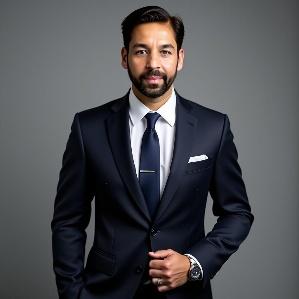
Varinder Kumar Sharma, technical manager at Nokia, has a long-standing career in telecommunications that has lasted more than 23 years. He has been involved in the US comprehensive wireless installation projects like LTE, VoLTE, and 5G networks upgradation for big players. His skills are inclusive of radio access network engineering, providing technical oversight, and controlling major events in the network operations area. In addition, he is pursuing a Master's degree in AI at the University of Texas at Austin and has also co-authored a paper on wireless and emerging technologies with IEEE.
Media Contact
Company Name: CB Herald
Contact Person: Ray
Email: Send Email
Country: United States
Website: Cbherald.com